Super Simple - Kids Songs
- 4.2
- Rating
- 1.00M
- Installs
- Free
- Price
 Analysis by App-foxy
When I look for a first educational app for a toddler, I care less about having the biggest library and more about whether the experience feels calm, understandable, and easy for an adult to control. Super Simple - Kids Songs fits that decision well because it combines children’s songs with gentle learning activities and lullaby-style listening. I found it most useful as a short, guided part of a child’s day rather than something to leave running for hours.
The app comes from Skyship Entertainment Company and sits in the education category. It is free to install, marked for Everyone, and has reached over a million installs. Its average rating is 4.3 from around 3,400 ratings, which suggests that many families find the basic idea worthwhile while still leaving room for different opinions about the paid content and the way young children use it.
What I considered before recommending it
I weigh more than a child’s first burst of interest when deciding whether this app deserves a regular place in the routine. I look at whether its songs can serve different moments, whether an adult can keep sessions intentional, and whether the free experience is enough before considering optional purchases. Those practical questions matter because a useful habit should stay manageable after the novelty wears off.
You May Also Like

 Blood Strike: 2.5 Anniversary
Blood Strike’s Loadouts Turn Every Drop Into a Tactical Gamble
A close look at Blood Strike’s custom loadouts: how fast access to signature weapons reshapes its battle royale rhythm, rewards preparation, and narrows the gap between fights.

 Pandora - Music & Podcasts
Pandora’s Music Is Easy to Start, but Harder to Recover
Pandora’s strength is its low-effort path from a seed to a station. Its weak spot is how much confidence it asks you to place in connection, setup, and quiet recovery.

 8 Ball Pool
 Is Built on Rivalries, Rematches, and Routine
A close look at the rivalries, rematches, shared routines, and unanswered safety questions that turn a quick pool match into a persistent mobile community.

 Samsung Music
’s Quiet Strength Is Playing What You Already Own
Its reach comes less from spectacle than from dependable access to a personal library. That simplicity is both the app’s strongest retention engine and its ceiling.

 AccuWeather: Weather Radar
AccuWeather Review: A Quick, Clear Forecast for Everyday Decisions
For everyday plans, the best forecast is the one you can understand quickly. AccuWeather makes rain timing, radar, and local conditions easy to act on, with a few trade-offs.

 Hill Climb Racing
Why Hill Climb Racing Still Turns Crashes Into One More Run
A tiny car, a bumpy hill and one more upgrade: Hill Climb Racing keeps resurfacing because its simple chaos makes every near-miss feel personal.
More From Our News Desk



The right question is not simply whether a toddler likes songs
Most toddlers enjoy repetition, rhythm, bright characters, and familiar words, so almost any song app can produce a quick smile. My real test was whether the app could support a useful routine without making the child dependent on constant stimulation. For that, I paid attention to how easily an adult can choose an activity, whether the content feels suitable for very young children, and whether the app works equally well for active play and quiet moments.
This is where the app’s focus matters. It is not presented as a general video platform or as a demanding course for early learners. The appeal is the combination of educational songs, simple adventures, and relaxing lullabies. That makes it easier to match the app to a moment: movement and singing during daytime play, or softer listening before sleep.
I would also decide in advance what role the screen should have. If you want an app that teaches through direct adult-child interaction, this can be a helpful prompt, but it should not replace talking, reading physical books, drawing, or playing with real objects. A song about colors is more valuable when I pause to point out colors in the room. A counting song becomes more useful when I count blocks together with a child.
Who will get the most from it
The strongest audience is toddlers and preschool-age children who respond to repetition and music. It can be especially handy for parents who want familiar material during transitions: getting dressed, tidying toys, washing hands, or settling down after an energetic afternoon. Because the content is aimed at Everyone, I would feel comfortable considering it for a shared family setting, while still deciding which selections suit a particular child’s age and mood.
It is also a reasonable starting point for a child who is not ready for text-heavy learning apps. A toddler does not need to read menus to benefit from hearing words repeated with a melody. The adult can handle the selection while the child focuses on listening, moving, copying gestures, or joining in with sounds.
On the other hand, I would not choose it as the main tool for an older child who needs structured literacy, mathematics, handwriting, or progress tracking. The app’s strength is early learning through songs and familiar routines, not formal assessment. Families looking for lessons with measurable stages may be happier with a dedicated learning platform, even if that platform feels less relaxed.
A realistic morning routine
One practical way I would use it is during a short morning transition. After breakfast, I could choose a song that encourages movement while the child gets ready for the day. Instead of handing over the device and walking away, I would stay nearby, copy the actions, and stop after a small selection. That keeps the app connected to a real activity rather than turning it into background noise.
The same approach works for language practice. If a song repeats everyday words, I would repeat those words away from the screen and invite the child to find matching objects. The app supplies rhythm and repetition; the room supplies context. This simple change makes the experience feel more educational than passive viewing.
For evening use, the lullaby side is a better fit than lively songs. I would lower the room’s activity, choose a quiet selection, and treat it as one step in a bedtime routine rather than the routine itself. If a child becomes more alert whenever a screen appears, the physical version of the routine may be better: singing without the device, reading, and dimming the lights.
Where the experience feels strongest
The biggest advantage is the clear emotional range. Many children’s apps concentrate on energetic songs, but this one also makes room for calmer listening. That distinction matters in a household where the same device may be used at different times of day. I can imagine using it for a cheerful start, then relying on the quieter material when the goal is to reduce stimulation.
The song format is another practical strength. Repetition gives toddlers a chance to anticipate what comes next, join in gradually, and learn without being asked to complete a test. A child may first watch, then copy one gesture, then sing a repeated phrase days later. That slow participation is more realistic for early learning than expecting an immediate correct answer.
I also like that the app is described as safe and without ads. For a child-focused experience, avoiding advertising is important because unexpected promotions can interrupt attention or lead a young user toward something unsuitable. This does not remove the need for supervision, but it removes one common source of friction in children’s apps.
Three ways to use it more effectively
First, I would create a small rotation instead of letting the child choose endlessly. Pick one active song, one learning-focused selection, and one calm option. This gives the session a beginning and an ending, reduces menu wandering, and helps the child understand that the app is part of a routine rather than an unlimited reward.
Second, I would use the songs as prompts for offline play. After a song about animals, we might make animal sounds with toys. After a movement song, we might repeat the actions without the device. This is a non-obvious benefit of a music-based app: the best results can happen after the screen is put away, because the song gives the child a structure to continue independently.
Third, I would separate “quiet” from “sleep.” Lullabies can create a peaceful mood, but a glowing device may still keep some children interested. I would test the app earlier in the bedtime process, then stop it before the final lights-out stage. If the child asks for another song repeatedly, that is a sign to shorten the digital part rather than extend it.
What may require patience
The free entry point is useful, but families should understand that the full experience may involve optional purchases. The listed in-app purchase range is from $3.99 to $57.99 per item, so the difference between trying the app and unlocking more content can be significant. I would review any purchase screen myself before allowing a child to use the app, and I would decide whether the available free material already meets our needs.
That pricing structure also affects the comparison with ordinary music playlists. A family that already has favorite children’s songs may not need to pay for a larger in-app collection. The advantage here is the child-oriented presentation and the way songs are grouped around educational and calming use, not simply access to audio.
Another limitation is that songs can become repetitive for adults long before they become repetitive for toddlers. Repetition is part of how young children learn, but parents may want to alternate this app with physical books, ordinary singing, outdoor play, or another carefully selected activity. I would not judge the app by whether I personally want to hear the same song repeatedly; I would judge whether the child is participating and whether the routine remains healthy.
How it compares with common alternatives
Compared with general video platforms, this app is a more focused choice for parents who want children’s material without opening a broad entertainment feed. General platforms may offer more variety, but that variety can make selection harder and can expose a child to content that does not fit the moment. Here, the narrower purpose is a benefit when I want a quick, predictable activity.
Compared with audio-only music players, this app is more visually directed and may be easier for a toddler who learns through watching actions and characters. Audio-only listening is often better when the goal is to avoid screen exposure, especially during travel or bedtime. I would choose the audio option when the child can participate without looking, and this app when the visual element helps with movement or shared attention.
Compared with structured early-learning apps, this one feels less like a lesson plan. That makes it friendlier for casual use and less intimidating for a young child, but it also means it may not satisfy a parent who wants clear skill levels, exercises, or records of progress. In that situation, I would use a structured educational app for focused practice and keep this one for songs, transitions, and relaxation.
Compared with singing together without technology, the app offers consistency when an adult is tired, busy, or unsure which songs to use. Still, live singing has an important advantage: I can change the pace, answer questions, make eye contact, and respond to the child immediately. My preferred balance is to use the app as a starting point, then continue the song or activity together away from the screen.
Questions I would answer before installing
Is it genuinely free? The app is free to install, but optional in-app purchases range from $3.99 to $57.99 per item. I would begin with the free experience, check whether the included material is enough, and only then consider paying. The app should not be treated as automatically cost-free simply because installation does not require payment.
Is it suitable for a very young child? It carries an Everyone content rating and is designed around toddlers and early learners, so it is aimed at family-friendly use. I would still stay involved, particularly at the beginning, because suitability depends on the child’s sensitivity to screens, volume, pace, and repetition.
Can it replace preschool learning? I would not use it that way. It can reinforce words, rhythm, movement, and familiar routines, but it does not take the place of conversation, hands-on play, books, social interaction, or a formal learning plan. Its best role is a supporting activity that makes those experiences easier to start.
Will it work for a child who dislikes singing? Possibly, but I would not expect the same benefit. Some children may enjoy the visual adventures or lullabies more than joining in. If a child consistently ignores the songs, becomes frustrated by the screen, or asks only to switch between selections, a physical activity or story may be a better fit.
Is it current enough to consider? The current version is 2.7.14.0, and the app was released on September 21, 2020. Those details are useful when checking compatibility and deciding whether the app fits your device setup, but the more important test is still practical: does it run comfortably in your household, and do the available activities suit your child?
The cost of changing your routine
Switching from a general video service to this app may require a small adjustment for both parent and child. The child may be used to choosing from an endless stream, while this experience works better when an adult selects a short activity. At first, that can feel less convenient, but it also creates a clearer boundary around screen time.
Switching from physical singing to an app has the opposite trade-off. You gain ready-made presentation and consistent songs, but you give up some face-to-face interaction. I would avoid making the app the only source of music. A useful routine might begin with the app, continue with the same song sung together, and finish with an offline game connected to its theme.
Switching to paid content deserves a separate decision. I would not buy simply because a child enjoys one free song. I would first see whether the app is used repeatedly across different situations: active play, language practice, and calming down. If it serves only one occasional purpose, the free material or ordinary singing may be the better value.
My recommendation for families
I recommend Super Simple - Kids Songs to parents who want a gentle, focused entry into music-based early learning, especially when they value ad-free use and need both energetic songs and calmer lullabies in one place. It is most convincing when used deliberately: short sessions, an adult nearby, and a follow-up activity away from the screen.
I would skip it if you want a formal curriculum, detailed progress reports, or a completely screen-free bedtime. I would also look elsewhere if the optional purchase range does not suit your budget or if your child is happier with audio-only listening. Those are not failures of the app; they are signs that a different category may match your household better.
For my own recommendation, the deciding factor is flexibility without losing focus. The app can support a morning transition, turn a song into a movement game, or provide a quieter bridge toward bedtime. Use it as a shared tool, not a digital babysitter, and its simple format becomes a real advantage. Skyship Entertainment Company has made something approachable for early learners, and the free starting point makes it easy to judge the fit before spending anything.
Overall, I see it as a worthwhile companion for toddler routines rather than a complete education solution. Its strongest qualities are its child-friendly focus, musical repetition, calm options, and lack of ads. Its main trade-offs are the possible cost of expanded content, the limits of song-based learning, and the need for an adult to give the experience context. If those boundaries make sense for you, I would feel comfortable recommending it to a friend with a young child.
FAQs for Super Simple - Kids Songs
01What is Super Simple - Kids Songs?
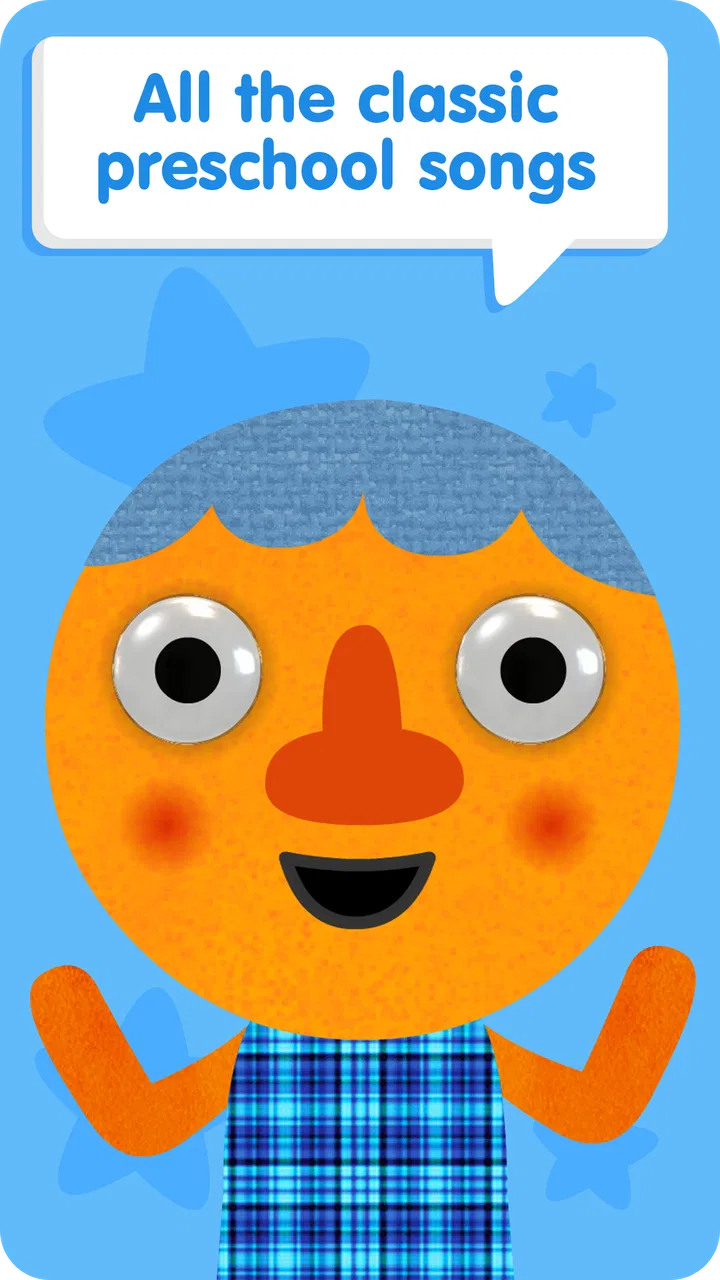
Super Simple - Kids Songs is an educational app designed for children, offering a collection of engaging and fun songs that promote learning through music. The app features classic nursery rhymes and original songs with colorful animations and easy-to-follow lyrics, making it a great tool for early childhood education.
02Is Super Simple - Kids Songs safe for children?
Yes, Super Simple - Kids Songs is designed with children's safety in mind. The app is free from ads and external links, ensuring a secure environment for kids to explore. Additionally, all content is age-appropriate and crafted to support learning and development in young children.
03What devices are compatible with Super Simple - Kids Songs?
The app is available for both Android and iOS devices. It is compatible with most smartphones and tablets running recent versions of these operating systems. To ensure optimal performance, it is recommended to keep your device's software updated to the latest version.
04Do I need an internet connection to use Super Simple - Kids Songs?
While an internet connection is required to download the app and any updates, many features are available offline. Once downloaded, you can access a wide selection of songs and videos without needing an active internet connection, making it convenient for travel or on-the-go use.
05Are there in-app purchases in Super Simple - Kids Songs?
Super Simple - Kids Songs offers a range of content for free, but there are optional in-app purchases available. These purchases unlock additional songs and features, providing a broader educational experience. It's advisable to manage in-app purchase settings if children are using the app unsupervised.
Pros
- Engaging and colorful animations.
- Ad-free experience for safe use.
- Wide variety of educational content.
- Offline access available.
- Easy-to-navigate interface for kids.
Cons
- Limited free content access.
- Requires internet for updates.
- No parental control features.
- Subscription can be pricey.
- Content may be repetitive.

Super Simple - Kids Songs
Gallery